French Horn Lineart Embroidery Review
As an experienced embroidery designer, I've reviewed countless machine embroidery designs for small business merch and branded patches. The French Horn Lineart stands out as a versatile option for creative professionals in the music industry or any brand looking to add a touch of artistic flair to their custom apparel.
First Impressions: A Professional Yet Playful Design
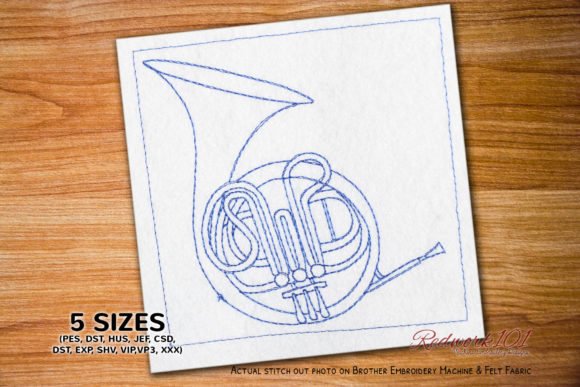
The French Horn Lineart immediately feels professional and well-crafted. Its clean lines and minimalistic approach make it feel both modern and classic. The design is not overly complex, which makes it ideal for a variety of embroidered applications. The mention of an optional Box Stitch adds a subtle detail that can be tailored depending on the desired look—whether you're going for a more structured or freeform appearance.
This lineart has a friendly yet elegant vibe that suits businesses ranging from boutique shops to creative studios. It's not too bold or too whimsical, making it adaptable to different brand identities.
Real Business Use: Where French Horn Lineart Shines
The French Horn Lineart is a great fit for embroidered patches, chest logo accents, sleeve details, cap designs, tote bag marks, apron designs, and branded product add-ons. For example, a local café could use this design as a patch on aprons or as a cap accent for staff uniforms, adding a subtle nod to music or creativity without overwhelming the overall look.
In the context of small business merch, this design can be used on work shirts, customer gifts, event merch, and even product packaging accents. It’s especially useful for custom apparel where a simple but meaningful graphic can elevate the finished product. When paired with other design assets, it contributes to visual consistency and reinforces brand identity.
The French Horn Lineart also works well as part of digital embroidery files for commercial embroidery projects. Whether you're creating embroidered patches for Etsy branding or designing tote bag designs for handmade brands, this lineart maintains its clarity and charm at various sizes.
Where to Use with Caution
While the French Horn Lineart is highly adaptable, there are certain scenarios where it should be used carefully. For instance, when using it on small patch sizes or cap fronts, the intricate details may become lost or appear cluttered. It's important to test how the design performs at smaller scales before finalizing production.
Additionally, the design may require careful consideration when applied to curved surfaces or items that need frequent washing. Ensuring proper stabilizer use and thread color contrast will help maintain the integrity of the embroidered patch over time. Darker fabrics may also require adjustments in thread colors to ensure visibility and visual appeal.
Impact on Brand Identity and Customer Engagement
Choosing the right embroidery file can significantly impact your brand's identity and customer perception. The French Horn Lineart brings a sense of professionalism and creativity to any brand identity, making it suitable for businesses in the music industry or those looking to evoke a similar aesthetic.
Using this design on custom apparel or handmade products can enhance product value and increase buyer engagement. It creates a cohesive look across all branded merchandise, helping customers recognize and remember your brand more easily.
For craft business assets, the French Horn Lineart offers a unique way to differentiate your products in a competitive market. It adds a touch of personality while maintaining a polished appearance that appeals to a wide audience.
Embroidery Designer Notes: Practical Tips for Production
Before using the French Horn Lineart for commercial purposes, here are some practical tips to consider:
- Test in black and white first: This helps determine if the design works well in monochrome settings or if additional thread colors are needed for visual impact.
- Check small patch size performance: Ensure the design remains clear and recognizable when scaled down for patches or cap embroidery.
- Review thread color contrast: Choose thread colors that stand out against the fabric texture to avoid blending into the background.
- Inspect spacing and outlines: Make sure the design doesn't have overlapping stitches or excessive density that might cause distortion during embroidery.
- Confirm hoop size and stabilizer use: Proper setup ensures the design transfers cleanly and remains durable after washing.
- Create a printable mockup: This allows clients to visualize how the French Horn Lineart will look on their chosen garment or item.
- Compare beside other design assets: Ensure the design complements existing logos or graphics for consistent brand presentation.
- Confirm commercial licensing: Always verify that the digital embroidery file is licensed for business use before proceeding with production.
By following these guidelines, you can ensure that the French Horn Lineart is used effectively in commercial embroidery projects and delivers the intended visual and brand impact.
Whether you're creating embroidered patches for your boutique or designing cap embroidery for your staff, the French Horn Lineart is a thoughtful choice that balances simplicity with style. With careful planning and attention to detail, this design can become a valuable asset in your small business merch strategy.